Blake Braun · 21 September 2026
Shifts in Search Engine Attention Allocation Following Major Platform Restructuring Events
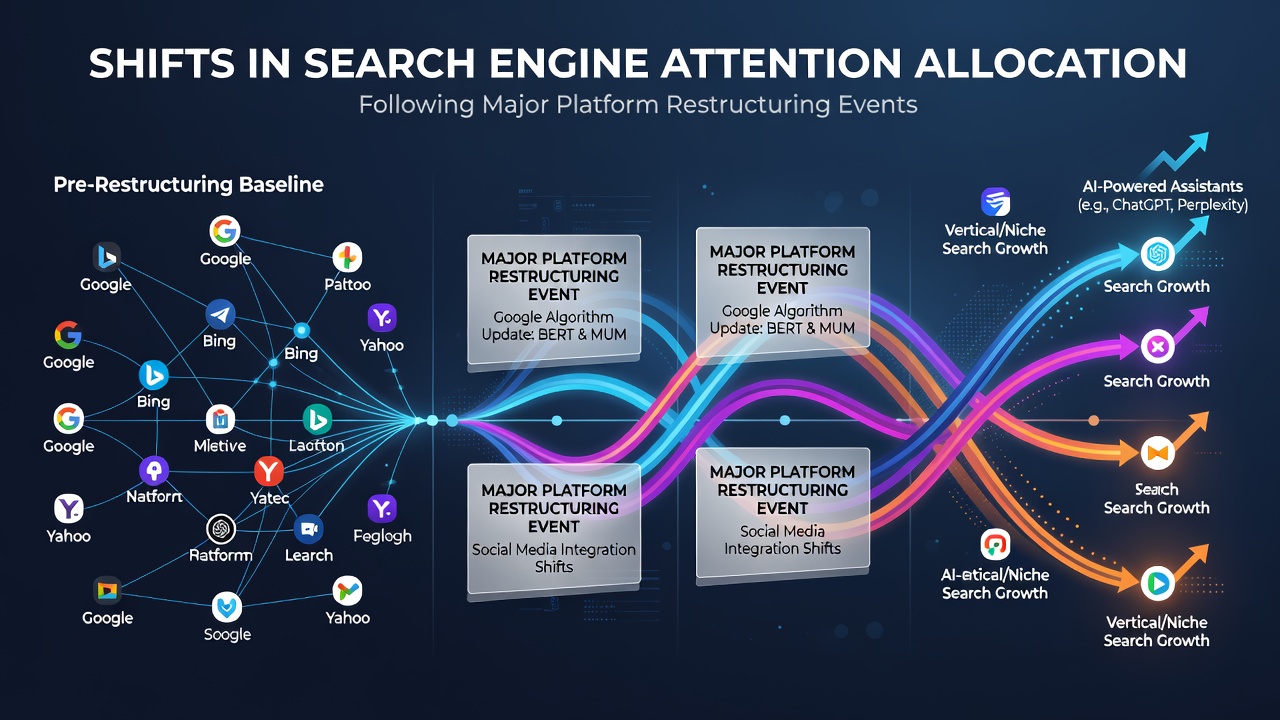
Platform restructuring events trigger measurable adjustments in how search engines distribute their crawling and indexing resources across web properties, and data from multiple monitoring services shows these reallocations often occur within weeks of announced changes. Researchers track shifts through metrics such as crawl frequency per URL, indexing latency, and priority scoring models that engines apply to new site structures. Observers note that these patterns emerge consistently across both large-scale migrations and incremental architecture overhauls.
Patterns Observed in Resource Reallocation
Search engines maintain finite crawling capacity, so any major reorganization forces them to recalibrate attention across directories, subdomains, and content clusters, while studies from academic institutions reveal that engines prioritize pages based on updated internal link graphs and historical engagement signals. When a platform consolidates sections or introduces new navigation hierarchies, engines respond by increasing visits to altered areas and reducing frequency on legacy paths that no longer align with the revised architecture. This rebalancing appears in server logs as sudden spikes in requests to certain folders followed by drops elsewhere.
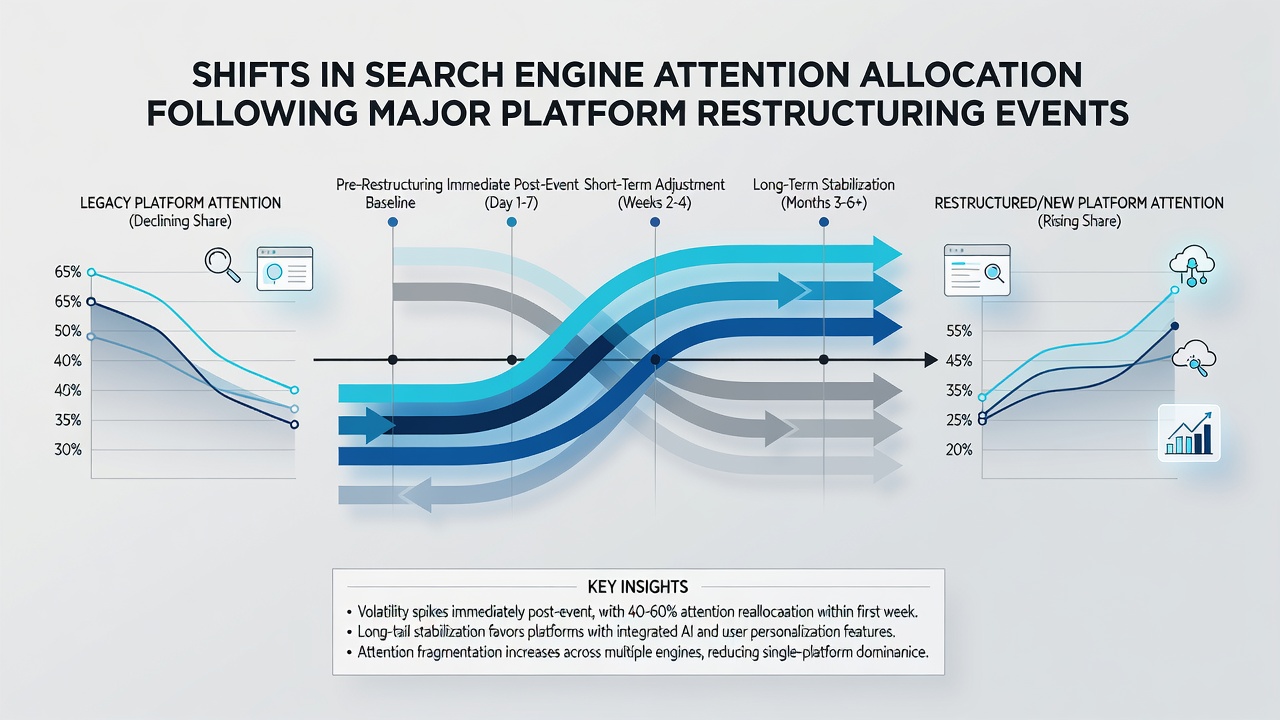
Figures released by industry monitoring groups indicate that crawl budget redistribution can last between four and twelve weeks after the initial restructuring date. During this window engines test the stability of the new layout through repeated sampling, and data shows that pages receiving fresh internal links often see faster reindexing than isolated sections. Those who've analyzed large datasets find that engines apply temporary boosts to recently modified templates before settling into steady-state patterns.
Case Examples from Recent Platform Changes
One documented instance involved a major content management system update in early 2025 that altered URL structures across thousands of sites, and subsequent analysis demonstrated engines reallocating attention toward the new canonical paths while deprioritizing duplicate parameter strings. Another example emerged when an enterprise platform merged multiple regional subdomains into a single global structure, after which monitoring tools recorded elevated crawl rates on the consolidated domain and reduced activity on the phased-out subdomains. These shifts aligned with broader industry reports that engines favor consolidated architectures when signals indicate improved user navigation.
In September 2026, continued observation of several high-traffic platforms undergoing similar consolidations confirmed that engines maintained elevated attention on restructured sections for roughly eight weeks before returning to baseline frequencies. Researchers at various institutions have compiled these timelines into comparative charts that highlight how the duration varies with the scale of the change and the volume of new content introduced during the transition.
Factors Influencing Attention Shifts
Multiple variables affect how engines redistribute resources, including the presence of updated sitemaps, changes in robots.txt directives, and the introduction of new schema markup that signals content relationships. Data indicates that engines respond more aggressively when restructuring coincides with the addition of structured data layers, because these additions provide clearer signals about page purpose and hierarchy. Conversely, migrations that retain outdated directives often experience prolonged periods of uneven attention as engines reconcile conflicting instructions.
Academic papers examining web-scale crawling behavior note that engines also weigh external signals such as backlink velocity and referral traffic when deciding where to allocate limited resources post-restructuring. Platforms that maintain consistent external link profiles during transitions tend to retain steadier crawl rates, whereas those experiencing link disruptions see more volatile attention patterns. European Commission reports on digital platform operations have documented similar dynamics across regulated markets, underscoring the role of technical consistency in resource allocation decisions.
Measurement Approaches Used by Analysts
Professionals monitoring these shifts rely on log file analysis combined with indexing status reports and third-party crawl simulators, and the resulting datasets allow comparison of pre- and post-restructuring activity. One common method involves segmenting logs by directory and calculating request ratios over rolling thirty-day windows, which reveals both immediate spikes and longer-term stabilizations. Additional metrics such as time-to-index for newly published pages provide further insight into how engines adjust their priorities after structural modifications.
Industry organizations tracking search infrastructure trends compile aggregated statistics that show engines generally increase overall crawl volume during restructuring periods before tapering back to previous levels. These compilations help identify whether observed changes stem from platform-specific events or broader engine policy updates affecting multiple sites simultaneously.
Conclusion
Attention allocation adjustments following platform restructuring reflect the adaptive mechanisms search engines employ to maintain efficient coverage of evolving web architectures, and the patterns documented across multiple cases demonstrate predictable timelines and influencing factors. Continued monitoring through September 2026 and beyond will likely refine current understanding of these dynamics as more platforms undergo similar transitions.